
Heat pump components
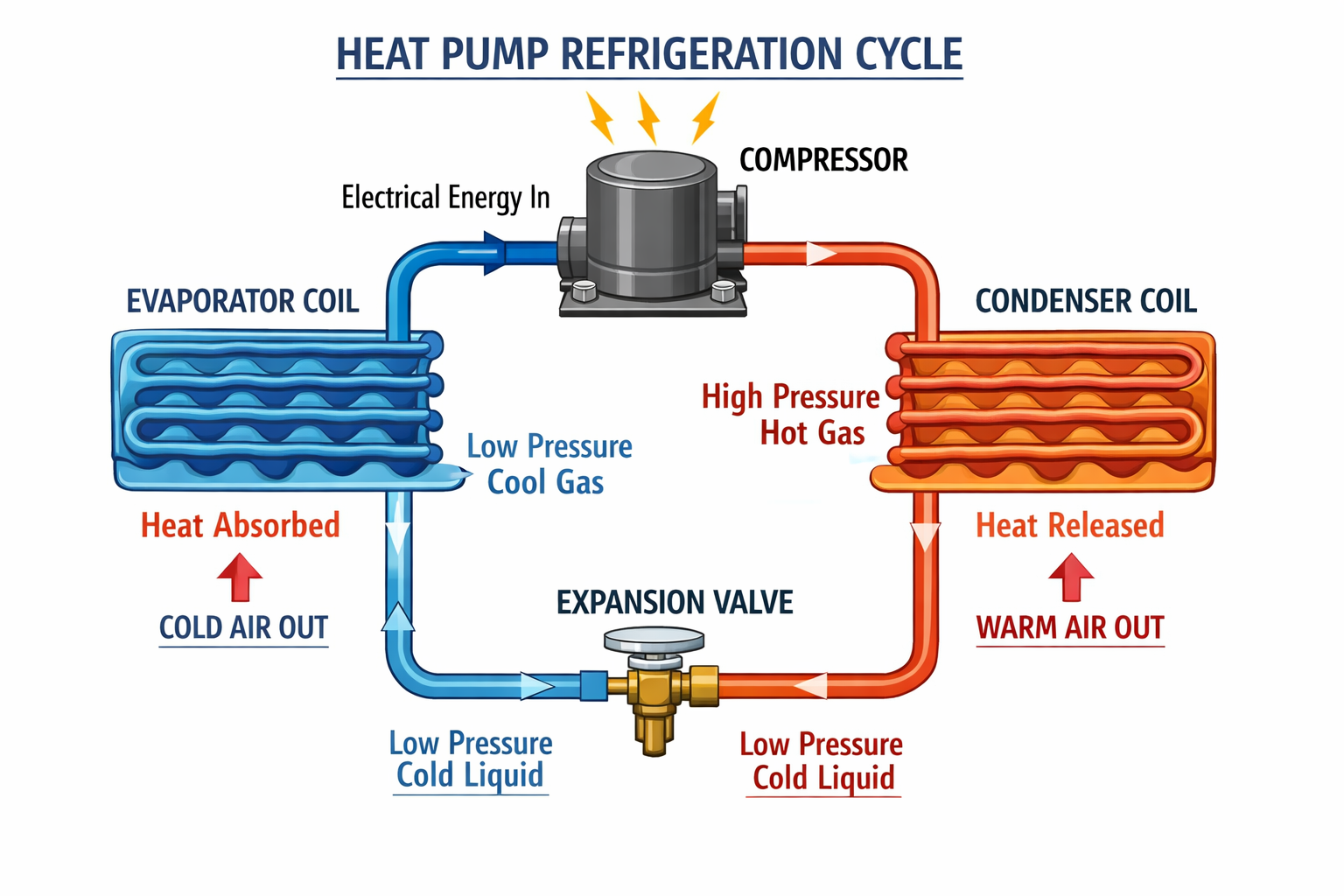
Most modern heat pumps operate on a vapor-compression refrigeration cycle, consisting of four main components:
- Evaporator: Low-pressure refrigerant absorbs heat from the source (air, ground, or water) and evaporates.
- Compressor: Raises the refrigerant’s pressure and temperature, increasing its enthalpy.
- Condenser: High-temperature refrigerant releases heat to the indoor space and condenses back into a liquid.
- Expansion Device: Reduces pressure and temperature, preparing the refrigerant to absorb heat again.
Energy efficiency
A reversing valve allows the system to switch between heating and cooling modes by reversing refrigerant flow direction.
Performance is typically evaluated using Coefficient of Performance (COP) for heating and Energy Efficiency Ratio (EER) or SEER for cooling. Because the system transfers heat instead of producing it directly, COP values often exceed 3 under moderate conditions — meaning three units of heat delivered for every unit of electrical energy consumed. What this means is that it would 3 times as much electricity to deliver the same amount of energy if using resistance heating.
A Simple Analogy
Think of a refrigerator: it pulls heat out of food and releases it into the room. A heat pump applies the same physics on a larger scale — moving heat into your building during winter or out of it during summer, depending on what you need.
Why Heat Pumps Matter
From an engineering perspective, heat pumps offer:
- High thermodynamic efficiency compared to resistive heating
- Compatibility with renewable electricity sources
- Lower lifecycle emissions when paired with low-carbon grids
- Potential integration with thermal storage and smart grid control systems
- Combined with solar panels and energy storage = free energy and heat pump operation!
As building electrification accelerates, heat pumps are becoming a central technology for efficient climate control across residential, commercial, and industrial applications.